- Oct 14, 2024
The 11 Sectors of the Stock Market
- Brian Montes
- 0 comments
U.S. Sectors
The US economy is divided into eleven key sectors, each significantly affecting overall economic health and market performance. Understanding these sectors and how their performance affects investor behavior is crucial for successful trading and investing.
These are the 11 sectors and their performance during the last week, month, quarter, and year (credit:FINVIZ)
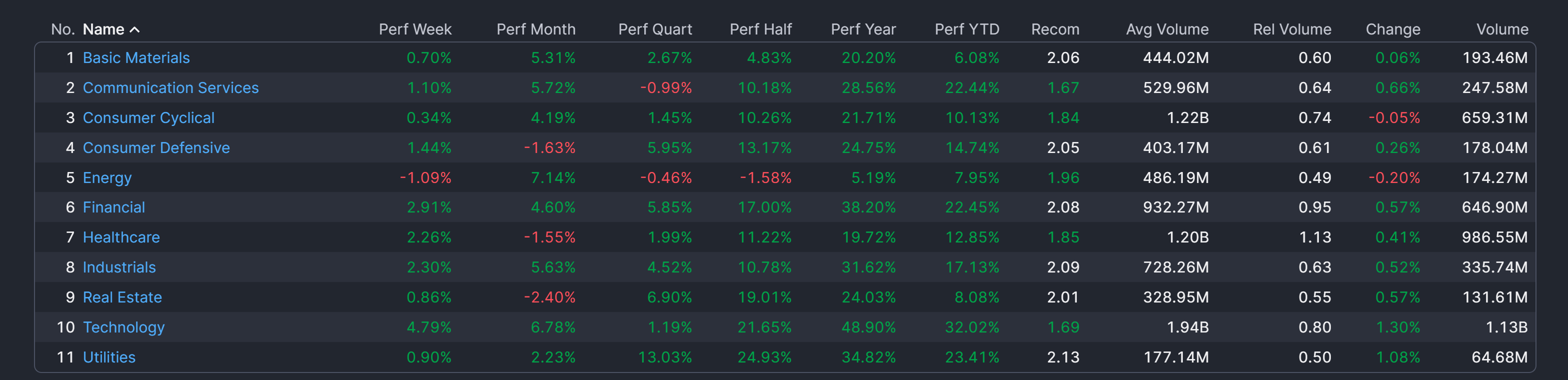
Next to each sector name, there is an acronym you can use to find them in your screening platform; there are many more acronyms to use.
Energy Sector (XLE, VDE, or others)
Upward Movement: Rising energy stocks indicate increased demand, rising prices, or economic growth. Geopolitical events and supply-demand dynamics can also influence this.
Downward Movement: Declining energy stocks may suggest decreased energy demand, falling energy prices, or an economic slowdown.
Industrials Sector (XLI)
Upward Movement: Rising industrial stocks indicate economic growth, increased manufacturing activity, and rising demand for industrial goods and services.
Downward Movement: Declining industrial stocks may signal economic slowdown, trade tensions, or rising costs.
Information Technology Sector (XLK)
Upward Movement: Rising tech stocks often indicate substantial economic growth, innovation, and investor confidence. It can signal technological advancements, increased productivity, and potential job creation.
Downward Movement: Declining tech stocks may suggest concerns about economic growth, technological disruptions, or regulatory challenges.
Financials Sector (XLF)
Upward Movement: Rising financial stocks indicate a strong economy, increased lending activity, and investor confidence in the economic system. It can also signal rising interest rates.
Downward Movement: Declining financial stocks may suggest economic concerns, tightening credit conditions, or regulatory challenges.
Materials Sector (XLB)
Upward: Economic growth, increased industrial activity, inflationary pressures, rising commodity prices.
Downward: Economic slowdown, decreased demand, commodity price declines, regulatory changes.
Consumer Discretionary Sector (XLY)
Upward Movement: Rising consumer discretionary stocks often indicate economic growth and increased consumer spending. It can signify rising consumer confidence and willingness to spend on non-essential goods and services.
Downward Movement: Declining consumer discretionary stocks may suggest economic slowdown, job losses, or changes in consumer preferences.
Utilities Sector (XLU)
Upward Movement: Rising utility stocks are often seen as defensive, indicating a stable economy and consistent demand for essential services.
Downward Movement: Declining utility stocks may suggest economic concerns or regulatory challenges.
Communications Sector (XLC)
Upward: Technological advancements, increased demand, favorable regulations, mergers and acquisitions.
Downward: Competition, regulatory challenges, economic downturn, technological disruptions.
Healthcare Sector (XLV)
Upward Movement: Rising healthcare stocks can reflect increased demand for healthcare services, aging populations, or advancements in medical technology. It can also indicate growing investor confidence in the sector.
Downward Movement: Declining healthcare stocks may signal concerns about healthcare costs, regulatory changes, or economic downturns.
Consumer Staples Sector (XLP)
Upward Movement: Rising consumer staples stocks are often seen as defensive, indicating a strong economy and consumer spending.
Downward Movement: Declining consumer staples stocks can signal economic weakness or changes in consumer preferences.
Real Estate Sector (XLRE)
Upward: Increased demand (population growth, economic expansion, low interest rates), economic growth, investor confidence, rising home prices, and rental rates.
Downward: Decreased demand (economic slowdown, rising interest rates, changes in consumer preferences), economic recession, job losses, and regulatory challenges.
Remember: These are general trends, and individual company performance within each sector can vary. I set up a watchlist in my charting platform for sector ETFs to monitor what is happening at a sector level. Conducting thorough research and considering multiple factors before making swing trading decisions is essential.
Stay Disciplined!